City of Cottage Grove
Case Study

City of Cottage Grove Tesimonial

Project Details

Date:        December 14, 1999
To:        Whom it may Concern
From:        David W. Jackson
Re:        City of Cottage Grove Water Dept
Location:    City of Cottage Grove, OR
Site:         Thornton Road
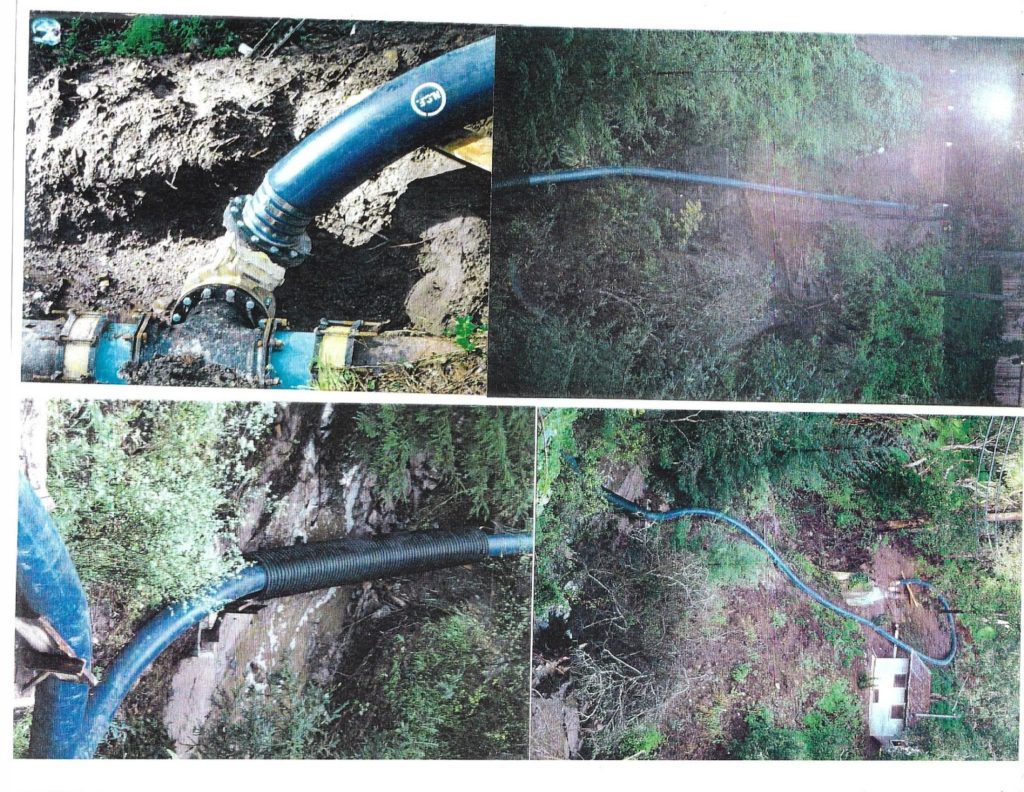
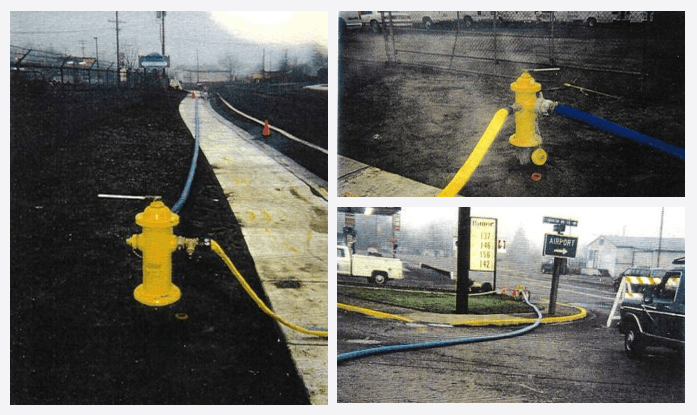
Situation:     The Cottage Grove Water Department was alerted to a leaking water main along Thornton Road. The water main was a primary supply line running through an industrial area of the city. The main could not be isolated. Plans had to be made to supply water while the construction/repair was being done. The underground main was 6″ in diameter.
Product:    350′ (1/350′) length of 4″ Blue Portable Pipeline

On Tuesday, the 14th of December, Superintendent Steve Beebe contacted Mike Burrell from the Munnell & Sherrill Co. about purchasing a 30′ length of 4″ Portable Pipeline. Field crews had isolated the leaking pipeline along Thornton Road. In order to expedite the repair, avoid additional delays and minimize the outage while increasing the flexibility Steve chose to install Field Attachable Victaulic ends on each length.

Two adapters were also purchased to permit the Portable Pipeline System to be connected directly to any Fire Hydrant in Cottage Grove. After the connection was made, the area was isolated for two weeks to complete the repair.

The Portable Pipeline was chosen because of its lightweight, ease of deployment, storage space and Potable Water Certifications. This combination made Steve consider the purchase of additional lengths of AquaMan Blue as an investment for future requirements.

Factory:  910 E. Noble Way Santa Maria, CA.  93454  Tel: 800-747-7075  Fax: 800-922-0086

Field Office: 3844 Mistral Dr. Huntington Beach, CA. 92649 Tel: 714-840-3740 Fax: 714-840-1434 Pg: 800-504-1514
 

City of Chula Vista
Case Study

City of Chula Vista

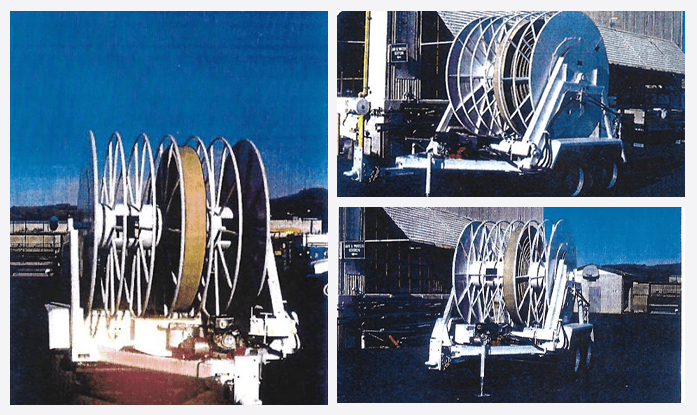
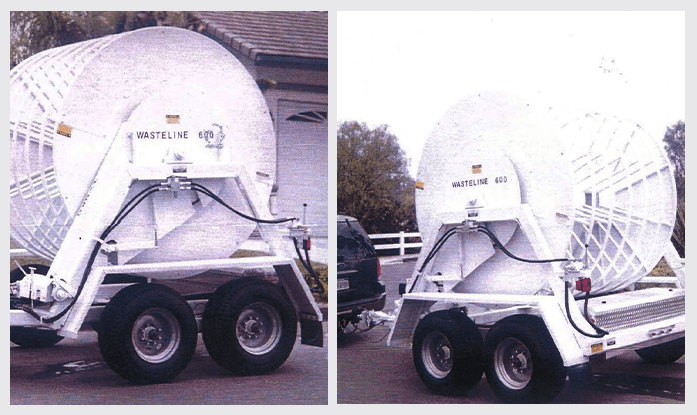
Brian Walther, Utilities Maintenance Supervisor Collections Division for the City of Chula Vista Public Works Chula Vista, CA. took delivery of an HR-6 System (Hose Reel System) in April 2004. Brian was determined that the Emergency Response Program for the City of Chula Vista Collections Dept. be prepared to respond quickly in the event of any unplanned Wastewater or Sewage spills.
To reduce their exposure and response time he chose to specify the HR-6 Reel System as the foundation for their Emergency Response Program. Brian required the system to have a 6 divided reel for the “Storage, Deployment and Retrieval” of up to 3960′ of 6″ Portable Pipeline. He wanted the system to meet the following basic criteria:
1. Ease and simplicity of operation “Transport/Deployment/Retrieval”
2. Storage space available for up to 3960’feet of 6″Portable Pipeline
3. Standard gasoline powered hydraulic retrieval system
4. Ease of overall maintenance with availability of standard component repair parts
5. Off-Road stability and ease of maneuverability

The HR-6 Reel System is manufactured by Hydro-Engineering Co. and distributed locally by authorized distributors of North American Hose I Portable Pipeline System.

WasteLine 600 Green or BlackLine 600 is available in sizes from 2″ – 12″, with working pressures of 300 psi for 2″, 200 psi for 6″, 220 psi for 8″, 125 psi for 10″-12″ and in lengths up to 660′. The pressure rating and availability in various sizes make it an ideal product for responding to large sludge; sewage or wastewater spills over long distances. Wasteline 600 Green or Blackline 600 in 660′ lengths avoid having to manhandle, transport and maintain multiple “heavy” & “short” lengths with numerous sets of couplings.

As an integral part of the HR-6 System, Brian requested multiple lengths of 4″ and 6″ Blackline 600. Brian also requested each length to have Cam-Lock ends with extra (FA6CL) Field Attachable Cam/Lock ends for quick simple positive connections. Brian also purchased a (FA6M) Field attachable Mender for field repairs when needed.
Brian considers the purchase of the HR-6 Reel System as the “foundation” for the Emergency Response Program for their city and have plans to purchase additional lengths of Blackline 600 as needed.

Factory: 910 E.Noble Way Santa Maria, CA. 93454 Tel: 800-747-7075 Fax; 805-922-0086
Field Office: 3844 Mistral Dr. Huntington Beach, CA. 92649 Te/:714-840-3740 Fax:714-840-1434 Pg:800-504-2514


Capistrano Valley Water District
Case Study

Capistrano Valley Water District Testimonial

Project Details

Date:         October 3, 2000
To:        Whom It May Concern
From:         David W. Jackson
Re:         Capistrano Valley Water District
Location:    City of San Juan Capistrano
Site:        Single Family Dwellings (photo attached)
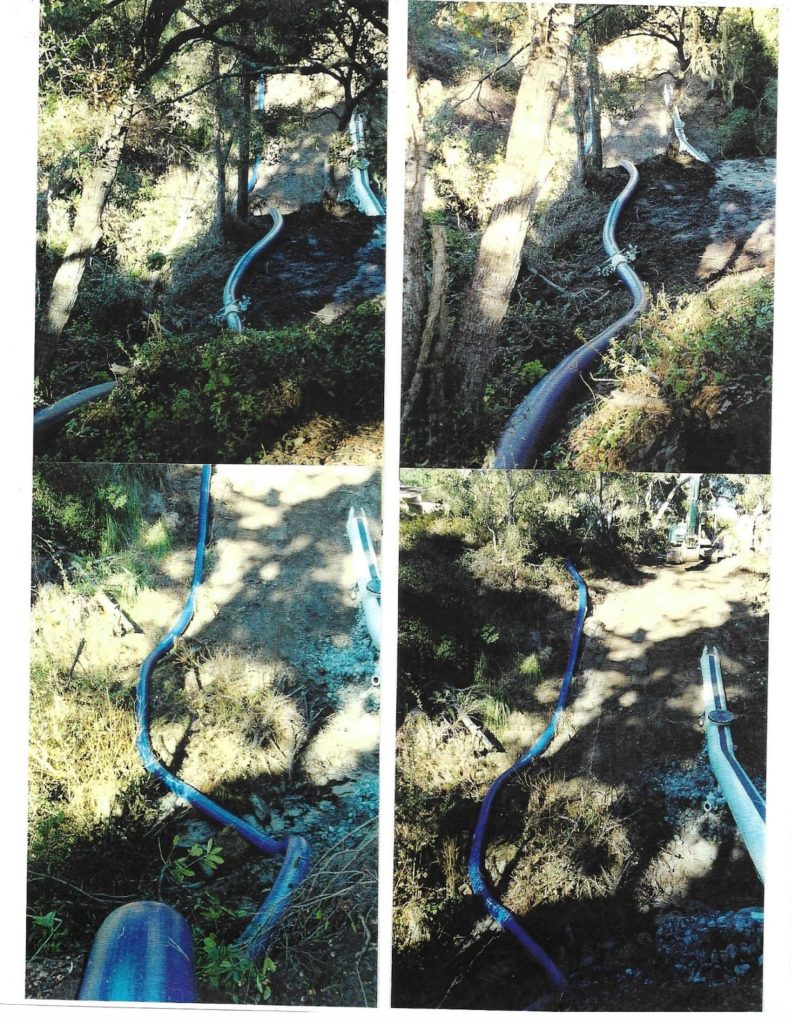
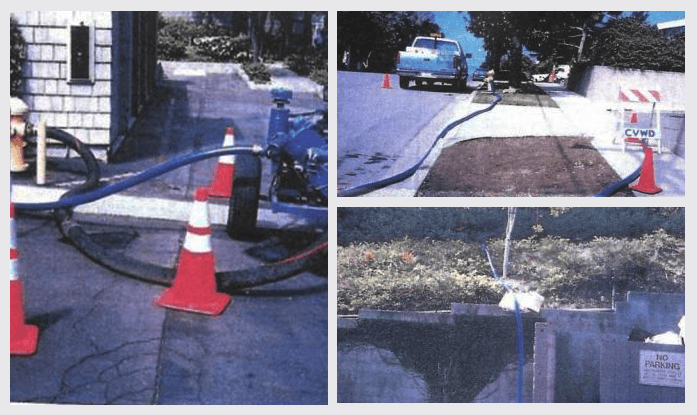
Situation:                                   Capistrano Valley Water District field repair crew responded to the loss of water in a residential area in the hills of Capistrano. A temporary booster pump was set­ up and water was delivered to residential customers in the affected area within a few hours.

Capistrano Valley Water District Distribution Supervisor Steve Aldo made a decision to purchase a number of 2-1/2″ lengths of Portable Pipeline. Steve purchased 400′ (4/100′) lengths to replace his non-certified Woven Jacket Rubber Lined Fire Hose he had been using for Hi-Lining operations. He had the Blue Portable Pipeline cut into 100′ lengths and coupled with Cast Brass couplings with Fire Hydrant threads.

On October 3rd the field crew responded to a call from residents in the hills of the City of San Juan Capistrano. The residents had lost their water pressure due to a break in a main. This area is known for its low water pressure and repetitive loss of water flow due to the shifting soil and water main breaks. The crew from CVWD installed a portable pump, located a Fire Hydrant and began supplying water to the residences within a few hours.

Steve was thankful that he had the Portable Pipeline in stock and could respond in a timely manner with certified Potable Water hose. Steve plans to continue purchasing lengths of Portable Pipeline as needed.


Factory: 910E. Noble Way Santa Maria, CA. 93454 Tel: 800-747-7075 Fax: 805-922-0086

Field Office: 3844 Mistral Dr. Huntington Bch, CA. 92649 Te1:7U-840-3’140 Fax:714-840-1434 Pg:B00-504-2514


Camp Pendleton
Case Study

Camp Pendleton 001

Marcus Engstrom, Supervisor I Emergency Services from Camp Pendleton, CA. took delivery of the HR–6 (Hose Reel System w/6 dividers) in November 2000. Marc is determined that the Emergency Response Program be prepared in the event of any unplanned sewage or wastewater spill. This is especially prudent due to this environmentally sensitive and highly visible area in northern  San Diego County.

To reduce their exposure and response time, Marc chose a HR-6 System to “Store, Deploy and Retrieve” the emergency bypass Portable Pipeline System. He required the system meet the following criteria:

  1.     Ease of “Transport/Deployment/Retrieval”
  2.               Storage space available
  3.               Type of power system used in the retrieval mechanism
  4.               Ease of maintenance
  5.               Overall maneuverability of the System in off-road applications

Marc chose the HR-6 System as the most complete system to meet his requirements. The HR-6 System is manufactured by Hydro-Engineering and distributed locally by authorized distributors of North American Hose I Portable Pipeline System equipment.

As an integral part of the HR-6 System, Marc purchased one (1/660′) length of 6″ WasteLine 600 as the “foundation” of his Emergency Response Program. He requested the length to have “Banded-On” Cam/Lock ends for quick book-up. Marc also purchased an extra set of FA6CL (Field Attachable 6″ Cam Lock) ends for use in an emergency if shorter lengths are needed. This flexibility will permit Marc to bypass both short and long distances without having numerous short lengths coupled together.

Because WasteLine 600 is available in sizes from 2″ through 12″ and in lengths up to 660′ make it an ideal product for transporting sludge, sewage or wastewater long distances. WasteLine 600 comes in standard Hi-Gloss Green color for Sewer, Hi-Gloss Purple for Recycled/Wastewater and Hi-Gloss Black, Tan or Orange for general discharge applications. WasteLine 600 bas a working pressure of 300 PSI in 2″ through 6″ sizes, 220 PSI in 8″ and 150 PSI for the 10″ and 12″.

Marc considers the purchase of the HR-6 System as a “basic tool” for the Emergency Response Program at Camp Pendleton and plans to purchase additional lengths of WasteLine 600 Green in the next fiscal year.


Factory: 910 E. Noble Way Santa Maria, CA. 93454  Tel: 800–747-7075  Fax: 805-922-0086

Field Office:  3844 Mistral Dr.  Huntington Beach, CA. 92649  Tel:714-840-3740  Fax: 714–840–1434 Pg:S00-504-2514

Case Study

Cal-Amer Water Co.-Chula Vista -Monterey Division

Portable Pipeline Systems

Date:    February 15, 1998

To:    Whom It May Concern From:   David W. Jackson

Re:    Cal-Amer Water Co.-Chula Vista -Monterey Division

This “Portable Pipeline Really Saved Us”

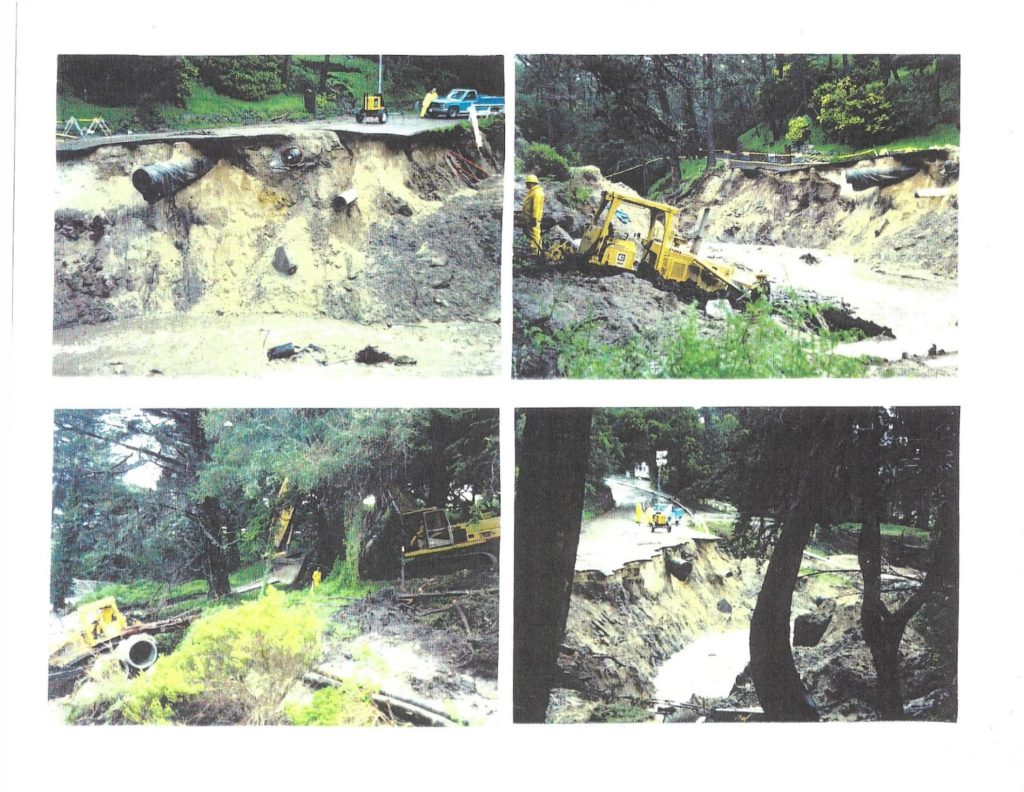
Those were the comments of Gary Weigand, Supt. of Water Distribution for the Cal-Amer Water Co. in Monterey, CA. Due to heavy rains from an “El Nino”, on February 2°d a road, a 16″ Sewer line and a 30″ water transmission line were washed out. This particular water transmission line carried drinking water to homes and businesses in a very hilly section of Monterey, CA. The 30″ main was shut down to try and retain water in two above the ground 5 million-gallon storage tanks. The loss of this reserve would havejeopardized the supply of drinking water to a large section of town.


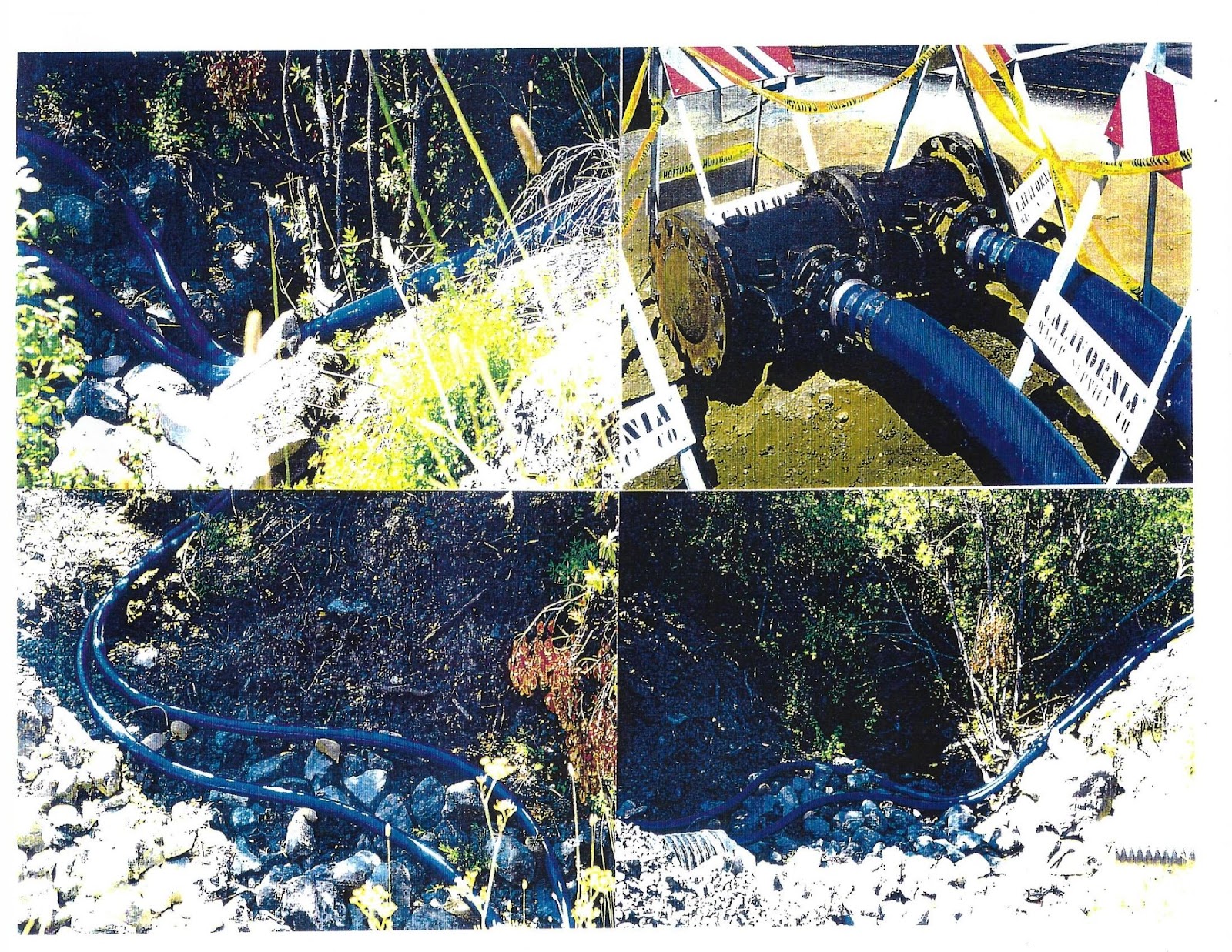
Gary made the following comments to me on the 13th of February while we looked over a canyon (photo attached) that was approximately 60 – 70 feet deep and more than 180 feet wide. We had a couple of options available to us”, Gary said. “We had steel pipe in our yard but the time, the rough terrain of the area and the unstable ground due to constant rain did not make the installation of steel pipe a viable option, especially since it was only going to be used as a “temporary” line. I was looking for something quick, reliable, not requiring a lot of manpower or heavy equipment to move and install yet large enough to handle our water needs. That’s when I remembered that East Bay MUD in Oakland recently purchased some large diameter portable pipeline for their earthquake preparedness program for crossing the Hayward fault. I thought that this large diameter portable pipeline could be the answer to my problem! I figured we could deploy this across the canyon more quickly, with less manpower and equipment than any other product available on the market. Then, we could be back “on Line” with this temporary water main while we worked around the clock to get the road and this 30″ transmission line repaired.


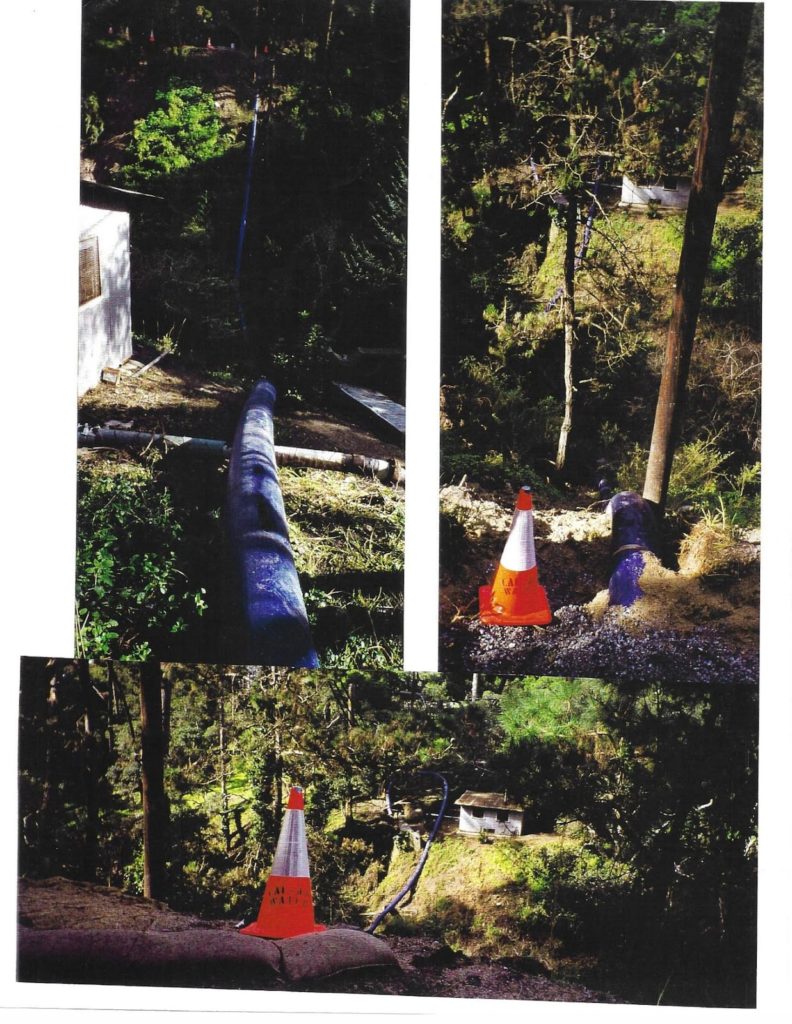
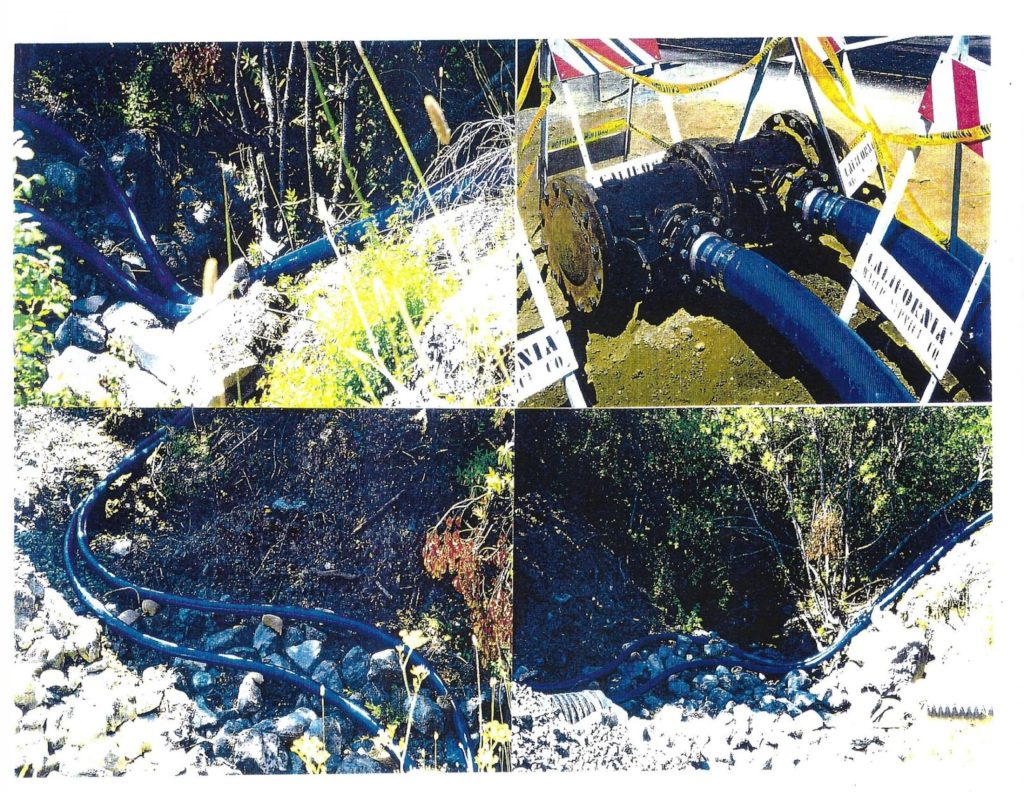
As a member of (WARN II Water Area Resource Network) I called EBMUD and made contact with the “Emergency Response Group”. Those guys knew exactly what they had in inventory and what we would need! Arrangements were made with CHP’s and they brought 210 feet of 12″ and some 8″ portable pipeline to Monterey that evening. On the 4th we began tapping into an abandoned 16″ water main and installed a temporary butterfly valve using flange adapters. About 9 PM in the dark, in a rain storm with only six men it took us about one hour to lay that portable pipeline down the steep bank, across the stream and back up the other bank. We then connected the portable pipeline to the butterfly valve using the Viet/Flange adapter. We supported the lower portion of portable pipeline that crossed the stream with a steel I-beam. For external protection we decided to cover it with a 24″ corrugated plastic culvert pipe. We felt that since we were borrowing this system we wanted to protect it from any potential damage. We were really concerned that some debris, like a washed out tree might crash into it, especially if we had any additional rain. We did not want this temporary line to get punctured since it was working so well and we were just borrowing it! We charged the line with approximately 135 psi. of pressure. After two days with a service man watching the hose around the clock we concluded this Portable Pipeline was doing what it was designed to do. It really saved us time and money!

The reserve water supply in those two 5 million gallon tanks continued to be used until the repairs were completed. We used the 12″ System for a total of 10 days with no problems.

This “Portable Pipeline System” Really Saved Us!


Portable Pipeline System

Field : 3844 Mistral Dr. Huntington Beach, CA. 92649  Tel:714-840-3740 Fax:714-840-1434  Pg:B00-504-2514 E-Mail: Uoft70@aJt.net


California Water Company Testimonial_0002
Case Study

California Water Company, San Jose – San Mateo Division

Date:   September 1, 1998

To:    Whom It May Concern 

From:   David W. Jackson

Re:     California Water Company, San Jose – San Mateo Division

Location: San Mateo, CA.

Site: Polhemus Road (photo attached)

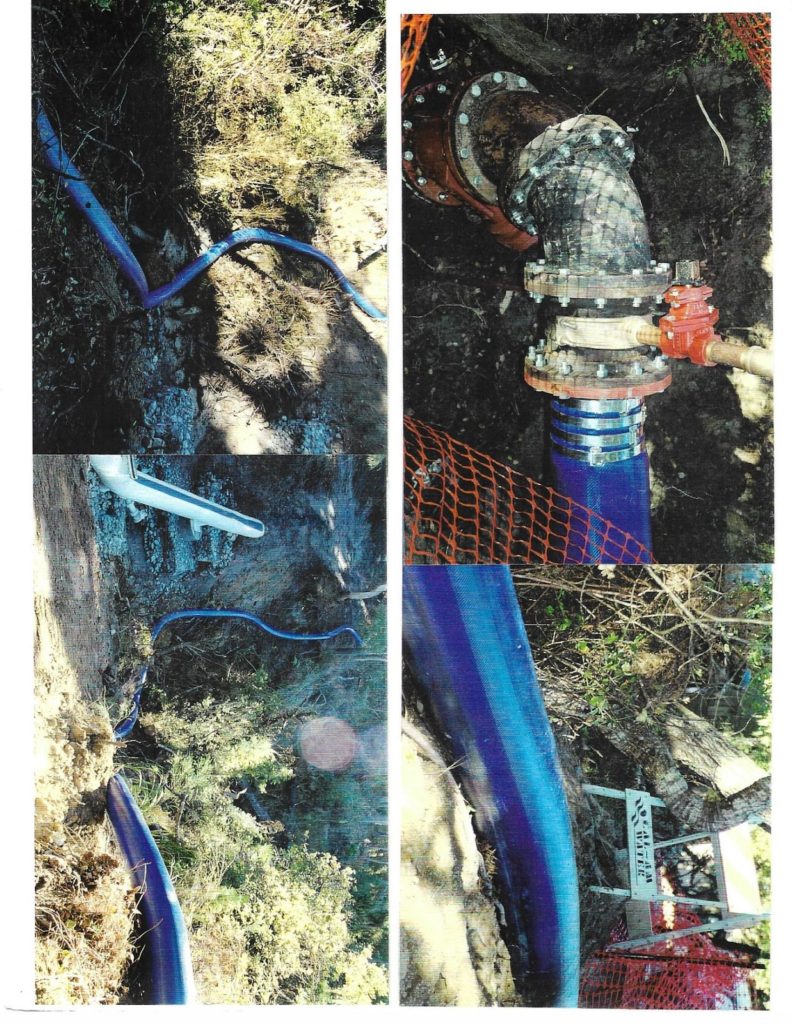
Situation:                                  San Mateo is located in a seismically active area in the hills West of the San Francisco airport and experienced a broken 1O” water main. The 10″ main was moved laterally approximately 50 to 60 feet due to a hill slide. Several homes above this area were condemned and removed.

Product:                                (6/250′) lengths of 6″ Portable Pipeline with Banded-On Cast Aluminum end pieces w/ Victaulic grooves.


(CWC) decided to purchase the Portable Pipeline System and deploy 2 parallel lines 750′ to replace the broken 10″ cast iron water main. The 10″ main had approximately 175 lbs of water pressure on it at all times. CWC bolted 2 cast iron reducing “T”s with 6″ butterfly valves on each line. They connected two 6″ parallel lines with Banded-On Aluminum Victaulic groove ends to the 6″ Tee’s by using Victaulic #741 Vic-Flange adapters.

The California Water Co. field maintenance crew deployed two parallel lines 750 feet each in just a few hours. Using the Portable Pipeline System eliminated the need for extra manpower and any special equipment for deployment. Each length was rolled down the hill and dragged over the rocky terrain by hand . The crew doing the work commented that the product was “a lot easier to move and a lot tougher than what they had thought.”

CWC expect the 6 lengths to be on location for at least 6 to 8 months due to the continuous shifting soil and potential for a complete line failure.

Once this project is finished the Portable Pipeline will be kept in reserve in the maintenance yard ready to be used for any scheduled shutdowns or future emergencies where drinking water is needed.

CWC considers the purchase of the Portable Pipeline System to be a very “cost effective” investment and expect to purchase additional lengths in the future.

Factory:  910 E Noble Way Santa Maria, CA. 93454 Tel: 800-747-7075 Fax: 805-922-0086

Field Location: 3844 Mistral Dr. Huntington Beach, CA. 92649 Tel: 714-840-3740 Fax: 714-840-1434 Pg: 800-504-2514


Case Study

CA/AM Water Company -Monterey

Date: November 15, 2000

To: Whom It May Concern

From: David W. Jackson

Re: CA/AM Water Company -Monterey


Location:                         City of Monterey

Site:                                  Repair of 30″ Main


Situation:                        CA/AM Water Company of Chula Vista with an area office in Monterey discovered a leak in an existing 30″ supply main. In order to repair the single line they required a “back up” line to be in place prior to beginning the repair.


On the 6th of November the CA/AM Water Company from the Monterey area office was informed that they had a leak in an existing 30″ water main. The main had a static pressure of over 100 psi. The line was old and had numerous rusted areas finally causing the line to leak.

Arrangements were made to borrow a total of 250 feet in various lengths of 12″. Loaning the 12″ Portable Pipeline was made through the agreements within the Water Area Resource Network (WARN II) organization.

A call was made to EBMUD who made arrangements to bring 250′ of the 12″ Blue Portable Pipeline with all necessary accessories to connect the temporary line to the existing water main at both ends. The 12″ temporary line was placed above ground parallel to the primary 30″ pipeline. The temporary line was charged with water and on reserve inthe event of the 30″ line rupturing during repair.

Upon project completion CA/AM made arrangements to budget funds for additional lengths of 6″ and 12″. These two sizes makeup the majority of supply needed for their future emergency preparedness programs.

Factory:  910 E. Noble Way Santa Maria, CA.  93454  Tel: 800-747-7075  Fax: 805-922-0086

Field Office: 3844 Mistral Dr. Huntington Bch, CA. 92649 Te/:714-840-3740 Fax:7 l4-840-J 434 Pg:B00-504-2514


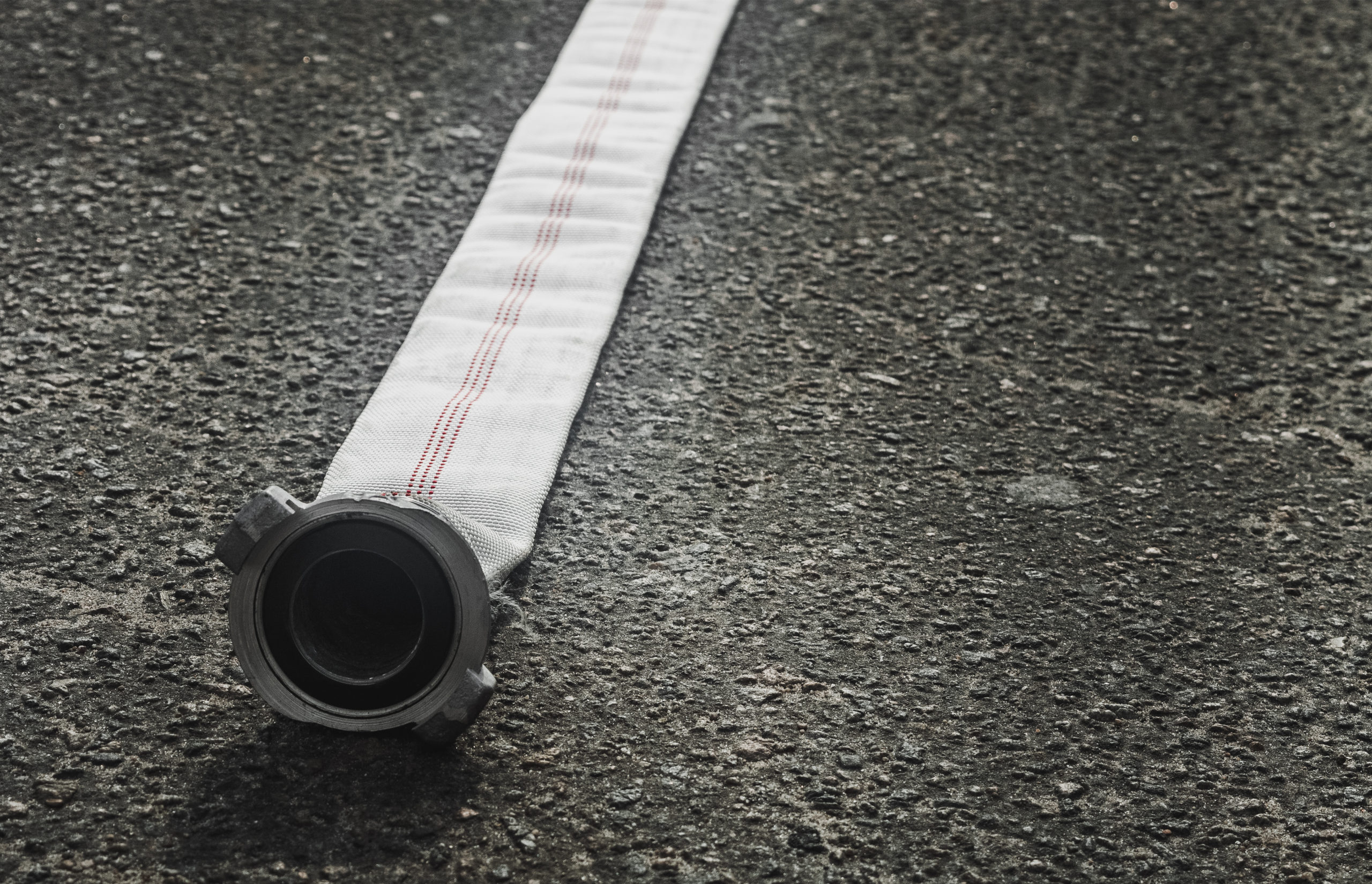
fire hose lying on the dark asphalt
Emergency Response Systems for Water and Wastewater

Why The Layflat Hose Needs To Be Part Of Your Plan For Emergency Flood Services

A plan for emergency flood services needs to include Layflat hose because of how dependable and easily customizable the hose can be.


When it comes to a flood or water damage emergency in your town or city – minute counts.

Moving Floodwater Quickly And Efficiently For Everyone’s Safety

If floodwater gets inside of your area’s homes, businesses, or even infrastructure – and is not dealt with quickly –  you run the risk of sickness, water damage, mold, and irreparable destruction to anything that stands in its way.

What’s more is that flooded zones can quickly become unsafe for human exposure. Consider that dangerous bacteria begin to multiply in wet environments – in addition to the mold and rot that could come about as well.

In reality, all it takes is just a mere few inches of water to wreak havoc on your homes, offices, retail and industry settings.

So you need a quick and easy solution to move the water away from your vital operations, and you need to bring in new water for drinking and consumer use.


A Quick, Easy, And Customizable Solution For All Wastewater Or Floodwater Emergencies

Using the Portable Pipeline Systems Layflat Hose with an emergency trailer is your ideal solution. Our Layflat Hose can easily and quickly move wastewater from one point to another – especially as it relates to defending critical buildings and infrastructure like hospitals, commercial or industrial real estate, residential areas, or even busy intersections.

The solution is quick and easy because our hose can be cut to size right on site, and can adapt to any unique situation your spill presents. No more fitting, no more pipe connecting, or headaches involved with digging in the affected areas. Portable Pipeline Systems Layflat Hose offers the most quick above the ground solution for your crew out in the field who need efficiency and dependability.

What Does An Above The Ground Water Transportation System Do?

Above the ground, water transportation systems are both pipe by-passing and water removal solutions. They are commonly used in areas with severe flooding to remove water quickly and efficiently, so they should have no problem dealing with a water main break.

More important is their ability to completely supplement the water main to ensure no service loss during repairs.  These systems can come with their own trailers and have solutions for crossing roads and pavements.

Cities and towns rely on them because they are flexible tools to efficiently deal with any scenario, which can be critical in a high-pressure situation such as this.


Can The Layflat Hose Do Everything I Need?

A lay flat hose pipe can transport a high volume of water quickly, efficiently, and without error so that you can focus on solving the issue at hand. Layflat hoses are limited in some needs, but they provide a wide range of options as a critical tool out in the field, where things rarely go as imagined. When it comes to disasters or water main breaks, you’ll need any resource available to fix your problem.

In a flood, it is also better for first responders to utilize an above-ground water transportation system, as it is safer and more effective. Most people do not realize how dangerous a flooded area can be so they will continue with their day as if nothing was threatening their daily lives.  So our customers need to limit their liability as quickly as possible. Giving first responders the chance to quickly succeed with the proper tools is far more effective than, say, sending people in with buckets. They need the right materials, which work on command, and can be outfitted to any job.

Our hoses and wastewater assemblies, such as the Ultraman Hose, are excellent options for wastewater, flood management, agricultural, and mining. It can Transfer large volumes of liquid at higher-than-normal working pressures, lightweight and easy to deploy. It is made of high quality materials which give premium ultimate abrasion and puncture resistance.


Be Safe – Think Ahead

At PPS, we value preparation, trust, and integrity with our clients. We provide systems and solutions, not price only products.  Though we do not claim to have every solution for every disaster, we encourage clients to be open about their solutions and include all possible vendors. When in a disaster situation, a city, county, state, or government needs to consider all options.

As such, we guide our clients to prepare in advance for the worst, be it earthquake, flood, fires, or just an aging infrastructure.

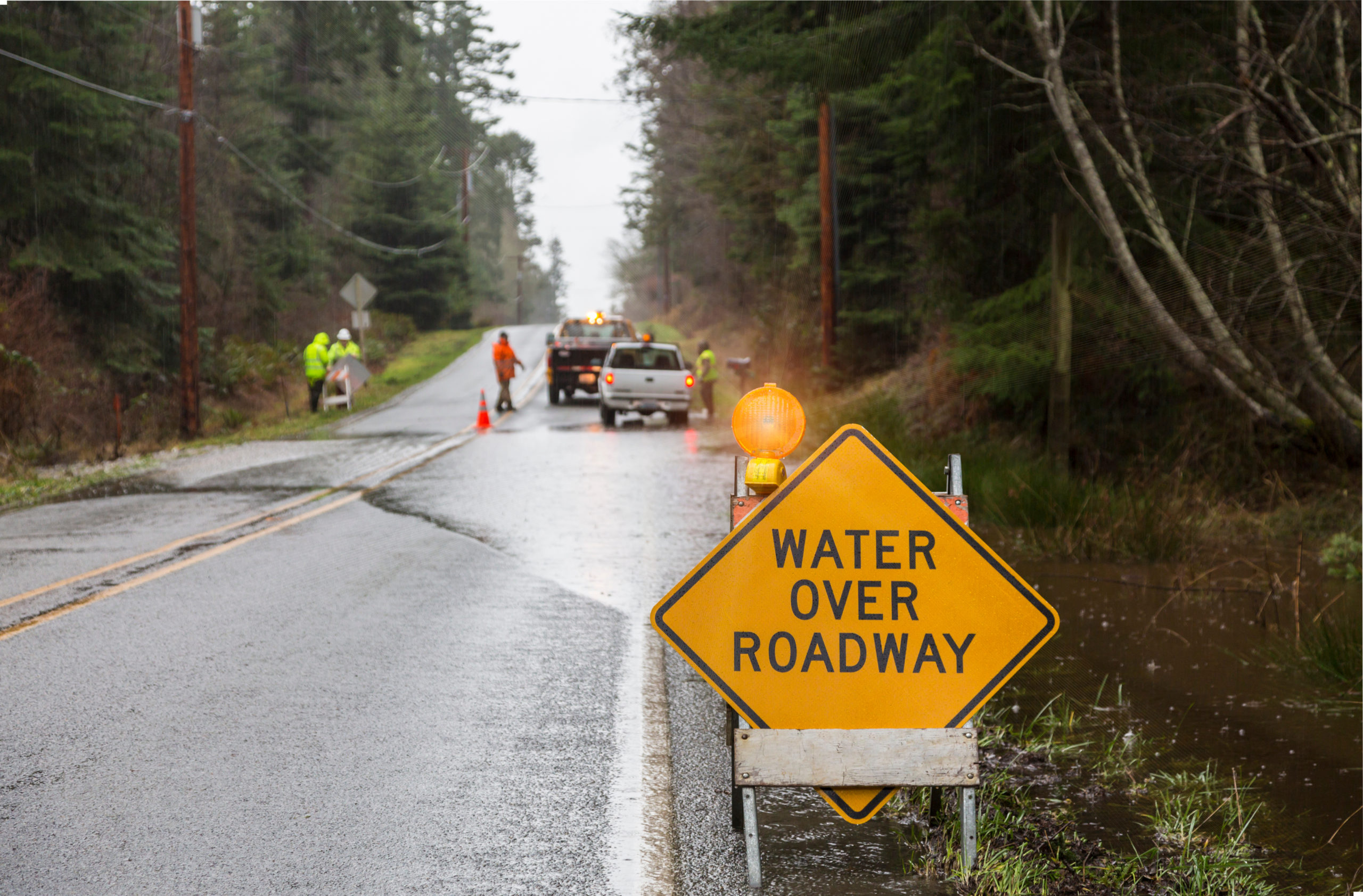
Emergency workers placing warning signs on flooded road
Emergency Response Systems for Water and Wastewater

Top 5 Flood Solutions To Protect The Most Important Investment In Your Life: Your Home

Flood risks will never be completely eliminated from homeownership but you do have some effective solutions to help mitigate potential problems.

Irrespective of your situation – whether it’s residential, commercial, farm, or industrial – there are essentially only two ways to combat flooding: prevention or protection.

Preventing floods is a very BIG topic which includes a massive effort in urban planning, proper sea-wall construction, and revising the current standards of home construction. Even if, however, every structure was still designed and built strictly to code (which we know is not happening) or every existing structure was leveled and rebuilt strictly to modern code (which we know is DEFINITELY not going to happen) prevention is only going to take us so far. Floodwater gets everywhere when it strikes.

When we think ahead, we also have to plan for not only prevention but also how to PROTECT us from floods when we know they are going to occur.  What’s the difference, right? Protection is more like temporary solutions surrounding your property – as opposed to permanent solutions built into your use. For instance, sandbags, or temporary flood barriers, are a perfect example of flood protection. As such, let’s examine the top 5 flood solutions for homeowners and business owners alike.


 1. The rapid response water-gate

Sandbags serve the task of protection in many scenarios, and it’s a great solution! But they often require a significant amount of preparation and set-up.  Not only that, let’s be honest, the can be a real pain to transport or move around once the flooding has stopped and ebbed.

The Rapid Response Water-Gate can be an extremely useful alternative to sandbags.

The easily deployable device is made of a PVC materia and tt utilizes the pressure of oncoming water to stabilize itself. In other words, the floodwaters push up against the gate and the force builds its own dam.

Because the device is super lightweight it can be deployed by a single person in a matter of minutes to hours depending upon the size. Not only that, it’s also completely reusable, so it’s a great option for those living in a region at risk of flooding.


2. Aquobex flood guard

This is  a small-scale dam that is designed to seal off doorways and entrances to buildings.

By creating a seal with the surrounding surfaces, water cannot enter the structure when these barriers are applied to all of the building’s entryways.

The barrier is completely reusable and can be quickly deployed in times of emergency.


3. Cisterns and rain barrels

Cisterns and rain barrels both act to capture and store stormwater runoff from roofs.

The difference between the two is that cisterns are larger, they can store runoff from larger roof areas, and they can be buried whereas rain barrels remain above ground.

Besides stormwater management, these structures save water that can be reused for irrigation and other non-potable uses.

Rain barrels typically retain around 50 gallons of water and cisterns retain between hundreds to thousands of gallons of water. Rain barrels cost between $90 and $140 and cisterns cost up to $1000.

In fact, some areas offer rebate programs for rain barrels and cisterns so be sure to check your local government site to see if you qualify.


4. Apply sealants or coatings to your home’s foundation and basement walls.

This seems fairly obvious, but it always goes overlooked when a flood is coming.

You don’t even need a contractor to seal the cracks. You can do it yourself!

We all know that even a little water getting into your home can cause mold damage and water damage to your belongings. It may not seem like a lot, but seal up those little cracks. Seal any cracks and gaps where water could seep into your home’s foundation. Also, coat the walls in your basement with a waterproofing compound to keep water from seeping through.


5. WIPP: Water Inflated Property Protector

The water inflated property protector is one of the most basic flood protection systems, and the good news is that it works.

This system is made up of connectable vinyl-coated polyester bags which hold large amounts of water and serve as temporary dams.

By fighting the floodwaters with more water, the heavy barrier system is a quick and effective way to stop floodwater ingress from a structure in much the same manner that sandbags work.  But there is far less back breaking work because once you’re done with the Protector, all you have to do is empty the vinyl bags, roll them up, and carry them off!


Be Safe – Think Ahead

At PPS, we value preparation, trust, and integrity with our clients. We provide systems and solutions, not price only products.  Though we do not claim to have every solution for every disaster, we encourage clients to be open about their solutions and include all possible vendors. When in a disaster situation, a city, county, state, or government needs to consider all options.

As such, we guide our clients to prepare in advance for the worst, be it earthquake, flood, fires, or just an aging infrastructure.

Texas At night
Disaster Response Emergency Response Systems for Water and Wastewater

Natural Disasters In Texas: Stressing The Weakness of Management Systems and How You Can Help

In the wake of Hurricane Harvey and the devastating flooding it caused, many people have been talking about water management. Texas has always been prone to natural disasters, but with climate change making these events more frequent, it is more important than ever to have a good water management plan in place. In this blog post, we will discuss the importance of good water management and how it can help your community prepare for future natural disasters.

What Natural Disasters Have Impacted Texas?

Texas has been hit by a number of natural disasters in recent years, including Hurricane Harvey, Hurricane Ike, the drought of 2011-2015, and the Bastrop wildfires. Each of these events has had a significant impact on Texas communities and highlighted the importance of good water management.

Hurricane Harvey was particularly devastating, causing $125 billion in damage and claiming more than 100 lives. The hurricane made landfall in Texas on August 17, 2017, and brought with it unprecedented levels of rainfall. Houston was hit particularly hard, with some areas receiving more than 50 inches of rain in just a few days.

The flooding caused by Hurricane Harvey was the worst in US history, and it took months for the affected communities to recover. The water damage alone affected hundreds of thousands of homes and displeased more than 30,000 people. In the aftermath of the hurricane, it became clear that many Texas communities lacked a good water management plan and were not prepared for such a large-scale event.

What Is Water Management?

Water management is the process of managing water resources in a way that meets the needs of people and ecosystems. It involves planning for and responding to both short-term and long-term water needs, including floods, droughts, and other natural disasters.

Good water management is essential for keeping communities safe during times of crisis. It can help reduce the risks associated with all-natural disasters and damage to infrastructure. 

How Can Water Management Help Communities Prepare for Natural Disasters?

Water management can help communities prepare for natural disasters in a number of ways.

-Flooding: A good water management plan can help reduce the risk of flooding by optimizing the transportation of floodwater out of affected areas. The best tool for this challenge is an emergency response trailer equipped with a high-quality lay flat hose. It can also help improve drainage systems and keep stormwater from overflowing into streets and homes.

-Drought: Optimized resources can help communities prepare for drought by regulating water use and conserving resources. It can also help to identify areas that are most at risk for drought and develop strategies to address them. We will see a greater need for drought solutions in the coming years as Texas continues to use up its underground water stores.

-Wildfires: First responders with access to reliable water transportation systems can stop the spread of wildfire and save lives. Clear, water management systems can also identify areas that are at risk for wildfires and develop fire prevention strategies.

How Can I Get Involved?

If you are interested in helping your community prepare for natural disasters, there are a number of things you can do. Here are a few suggestions:

-Contact your local government and ask how you can get involved in water management planning.

-Attend community meetings and workshops to learn more about water management and how you can help.

-Volunteer with local organizations that work to improve water management in your community.

-Donate to organizations that are working to improve water management in Texas.

Natural disasters can have a devastating impact on communities, but with good water management in place, these communities can be better prepared for the future. If you are interested in helping your community prepare for natural disasters, you can check out our above-ground water transportation solutions.


Check Out Our Selection Of Lay Flat Hoses